Undervisning: Halvvägs igenom NBIA25

Vi är nu ungefär halvvägs genom laborationerna i cellbiologi; vi har avverkat labb A, med mikroskop och hackade grönsaker och håller på med B, som är diverse övningar med plasmamembran och osmos (de färgglada rören på bilden!). Ni som har Instagram kan se en del av studenternas fotografier under taggen #nbia25. Sedan kommer C, fagocytos, där mitt sidoprojekt i år är att samla in data från grupperna och göra en liten modell (antagligen hierarkisk Poisson) för experimentet. Det blir roligt, och en del av mitt nyårsprojekt att öva mer på statistiska modeller.

Hur som helst, om någon student på kursen läser det här (vilket inte är helt otänkbart då min blogg tydligen är ganska högt upp i sökresultaten för kurskoden …) har jag några rekommendationer: Först och främst, den här lilla visan om jäst och etanol länkade jag redan förra året. Lägg märke till att det här är den rättade versionen efter att några kommentatorer påpekade ett par missar — kanske det enda dokumenterade fallet av konstruktiva kommentarer på YouTube. Vidare, på samma tema: Salgueiro & co (1988) och Quintas & co (2000) om etanol och jästens plasmamembran. Se figur 5 i den första samt figur 2 och 3 i den senare, räkna ut hur stor volymprocent etanol vi använder och jämför! Ha så kul.

IMG_0049 IMG_0052 IMG_0025 IMG_0037

ps. Berberisrödjaren!

Morning coffee: null in genetics

coffee

Andrew Gelman sometimes writes that in genetics it might make sense to have a null hypothesis of zero effect, but in social science nothing is ever exactly zero (and interactions abound). I wonder whether that is actually true even for genetics. Think about pleiotropy. Be it universal or modular, I think the evidence still points in the direction that we should expect any genetic variant to affect lots of traits, albeit with often very small effects. And think of gene expression where genes always show lots of correlation structure: do we expect transcripts from the same cells to ever be independent of each other? It doesn’t seem to me that the null can be strictly true here. Most of these differences have to be too small for us to practically be able to model them, though — and maybe the small effects are so far below the detection limit that we can pretend that they could be zero. (Note: not trying to criticise anybody’s statistical method or view of effect sizes here, just thinking aloud about the ”no true null effect” argument.)

Inför NBIA25: upptäckten av arkéerna

Det finns många olika sorters celler i biosfären. En del av dem, eukaryoterna, har sitt dna innanför ett inre membran i en cellkärna och en del andra, som kallas prokaryoter, har ingen kärna. Men det visar sig att det inte är fullt så enkelt, för det finns två stora grupper som saknar kärna, bakterier och arkéer, som inte alls är särskilt nära släkt. Arkéerna upptäcktes på 70-talet av bland andra Carl Woese och de bildar en tredje gren på livets stora släktträd. De tre grupperna eukaryoter, bakterier och arkéer brukar kallas de tre domänerna.

Nu är det kanske inte så enkelt heller. Dels har mikroorganismer olika sätt att flytta gener mellan arter som inte fungerar som arv i nedstigande led. Det kallas horisontell genöverföring, och det gör att grenarna på livets träd här och där ser ut som ett nätverk eller någon sorts rhizom, om vi ska spinna vidare på liknelsen. Dessutom är det inte helt klart att det verkligen är tre domäner; det finns minst en alternativ hypotes där eukaryoterna är att betrakta som en del av arkéerna. Men ändå. Det skulle inte vara riktig biologi om det var enkelt.

Igår nämnde jag i förbifarten sekvensering av gener för ribosomalt RNA. Ribosomen är den del av cellen som utför proteinsyntes och den är väldigt gammal, en del av det universella maskineri som alla celler delar. Dess funktion är så viktig att den ackumulerar mutationer långsamt. Därför går det att jämföra rRNA-gener för att identifiera arter, och jämföra dem mellan arter för att se hur nära släkt de är med varandra. Det var så arkéerna upptäcktes. Woese & co jämförde rRNA-sekvenser, i och för sig inte bara med sekvensering utan med ett RNA-nedbrytande enzym och tvådimensionell gelelektrofores (härlig vintage-metod!), hos ett gäng eukaryoter och prokaryoter och kom fram till att en del prokaryoter inte alls var nära släkt med bakterierna. Nyckelmening:

These ”bacteria” appear to be no more related to typical bacteria than they are to eukaryotic cytoplasms.

Jag rekommenderar den här bloggposten av Jonathan Eisen, Most important paper ever in microbiology? Woese & Fox, 1977, discovery of archaea, Och själva artikeln: den är inte så lång, och fritt tillgänglig.

Shaki_khan_palace_interier

(Äldre livsträd. Foto: Urek Meniashvili via Wikpedia. cc:by-sa 3.0)

Litteratur

Woese CR, & Fox GE (1977). Phylogenetic structure of the prokaryotic domain: the primary kingdoms. PNAS, 74 5088-9

Inför NBIA25: snäckors och salamandrars kloroplaster

Dagens organell: kloroplasten, stället i växtceller och gröna alger där fotosyntesen äger rum. Fotosyntes i eukaryoter är en fråga om symbios. Det började med någon kusin till cyanobakteriernas förmoder som på något sätt hamnade inuti en annan cell och utvecklades till vad som idag är en organell med visst oberoende i form av egen arvsmassa och egen delning. Kloroplasten producerar energirika organiska molekyler från ljus och kärnan i processen är lite lik en bakvänd version de försurade vakuolerna jag bloggade om igår. Energin från ljus konverteras till en pH-skillnad över ett membran inne i kloroplasten. När vätejonerna sedan passerar ut igen tar cellen vara på energin till energirika bindningar som i ATP och NADPH.

Hur bekvämt vore det inte att ha egna kloroplaster och kunna utvinna sin egen energi från solljus? Om växterna och algerna tagit upp dem så borde väl djur kunna? Det finns minsann ett helt gäng djur som lever åtminstone delvis på fotosyntes: svampdjur, nässeldjur, plattmaskar, blötdjur och sjöpungar (Venn, Loram & Douglas 2008). Men jag tänkte skriva om två extra roliga exempel: en snäcka som lagrar kloroplaster men inte verkar använda dem och en salamander vars ägg lever i symbios med fotosyntetiserande alger.

preview_315007

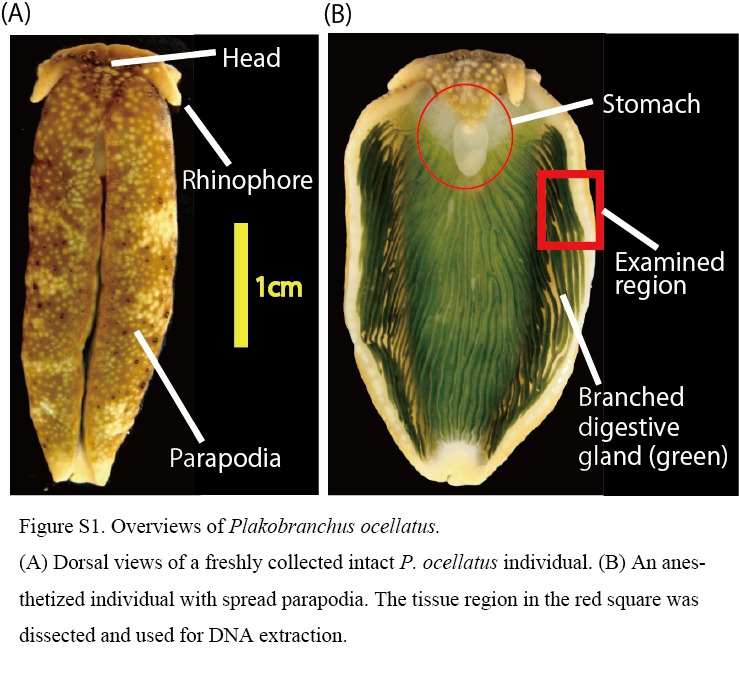
(Figur S1 från Maeda & al 2012. cc:by-3.0)

Det finns snäckor som tar upp kloroplaster från algerna de äter. Fyra snäckelarter har den egenheten att kloroplasterna finns kvar i deras matsmältningsapparat i månader och kallas mycket målande för kleptoplaster. Men hjälper kleptoplasterna verkligen snäckan att producera energi, eller ligger de bara där? Tyvärr verkar det, enligt Christa m.fl. (2013), Plastid-bearing sea slugs fix CO2 in the light but do not require photosynthesis to survive, och Meada m.fl (2012) Algivore or Phototroph? Plakobranchus ocellatus (Gastropoda) Continuously Acquires Kleptoplasts and Nutrition from Multiple Algal Species in Nature, som att de bara ligger där. Snäckorna verkar äta kleptoplasterna, inte använda dem som solceller.

Det är alltid roligt att stöta på en vetenskaplig debatt som en inte visste om: Snäckorna kan tydligen leva väldigt länge utan mat, och den gängse hypotesen har varit att det de får sin näring från de stulna kloroplasternas fotosyntes. Men Christa & co gjorde ett experiment där de höll snäckor i mörker och behandlade dem med en kemikalie som hämmar fotosyntes, och de klarade sig lika bra ändå. Snäckor utan någon möjlighet att få näring från fotosyntes klarade sig lika bra som kontrollsnäckorna i ljus. Åtminstone snäckarterna Elysia timida och Plakobranchus ocellatus verkar inte ha någon nytta av att deras internaliserade kloroplasters fotosyntes. Meada & co tittade på P. ocellatus i sin naturliga miljö, där de främst verkar leva just på att äta alger.

Den fotosyntetiska salamandern, däremot, verkar verkligen ha nytta av sin algpartner. Men det fungerar på ett helt annat sätt. Folk har studerat den länge, men Kerney m.fl (2011), Intracellular invasion of green algae in a salamander host, är ett exempel. Salamandern Ambystoma maculatum bor större delen av sitt liv under jorden, men den lägger ägg i våtmarker. På embryostadiet omges salamandern av gröna alger. I experiment med ljus och mörker klarar sig salamanderägg med alger och ljus bättre än de utan, och vice versa: det verkar alltså vara ett ömsesidigt utbyte mellan salamanderembryon och alger. Det Kerney & co gjorde i den här studien är bland annat att sekvensera algernas rRNA-gener för att placera vilka sorts görna alger det är, titta med elektronmikroskop och hitta alger inuti cytoplasman i salamanderceller, nära mitokondrierna. Trots det såg salamandercellerna normala ut. Det är kanske det konstigaste och intressantaste med hela affären: djur har ett synnerligen komplicerat och aggressivt immunförsvar som är specialiserat på att skilja egna celler från främmande organismer. Hur gör salamandern för att släppa in sin algpartner?

Litteratur

Christa G, Zimorski V, Woehle C, Tielens AG, Wägele H, Martin WF, Gould SB. (2013) Plastid-bearing sea slugs fix CO2 in the light but do not require photosynthesis to survive. Proc Biol Sci 281 doi:10.1098/rspb.2013.2493

Kerney R, Kim E, Hangarter RP, Heiss AA, Bishop CD, Halla BK. (2011) Intracellular invasion of green algae in a salamander host. PNAS 108 doi:10.1073/pnas.1018259108

Venn AA, Loram JE, Douglas AE. (2008) Photosynthetic symbioses in animals.  J. Exp. Bot. 29 doi:10.1093/jxb/erm328

Maeda T, Hirose E, Chikaraishi Y, Kawato M, Takishita K, et al. (2012) Algivore or Phototroph? Plakobranchus ocellatus (Gastropoda) Continuously Acquires Kleptoplasts and Nutrition from Multiple Algal Species in Nature. PLoS ONE e42024. doi:10.1371/journal.pone.0042024

Att komma i stämning inför NBIA25: vakuoler och petunians färger

En del av en doktorandtjänst är att undervisa, i mitt fall ungefär en femtedel av min tid. Det mesta av den tiden består av laborationer. Det är å ena sidan kul, för jag gillar laborativt arbete och tror att praktiska övningar är bra för lärandet. Sedan är det väl ingen som verkligen lär sig labbarbete på kurserna, men en får pröva på lite i alla fall. Å andra sidan består arbetsuppgifterna till stor del av att plocka fram och ställa undan prylar. Nu är det dags för årets kurs i Cellbiologi, inte längre den första men fortfarande en av de första kurserna på biologiprogrammet. Cellbiologi kan vara rätt tekniskt — många lådor och pilar! — men laborationerna handlar mycket om roliga observationer en kan göra med rätt enkla medel: mikroskop, hyfsat vanliga kemikalier, grönsaker, jäst och blodceller.

Kursen började den här veckan, men laborationerna kommer inte igång riktigt än. För att komma i stämning tänkte jag läsa och blogga lite kort om roliga artiklar som har (vaga) kopplingar till kursmaterialet. Jag visste till exempel inte att petuniablommor har olika färg beroende på vilket pH de har i sina vakuoler. Vi tar det från början: Vakuoler är en sorts organeller, membranklädda avdelningar inne i celler. Vakuoler kan lagra vatten, salter, näring innehålla enzymer och — i många färgade celler — färgämnen. I petuniablommans fall: anthocyaniner — organiska färgämnen som är pH-känsliga. Det är därför rödkålssaft fungerar som pH-indikator. Jag har skrivit förut om andra genetiska varianter som kan reglera hur mycket anthocyanin som producera i en annan blomma. Att vakuolen är avskärmad från resten av cellen med ett membran betyder att den kan ha en annan kemisk miljö än cytosolen. Petuniablommans vakuoler är surare än resten av cellen och dess pH dras ner av proteiner som sitter i membranet och pumpar vätejoner från cytosolen till vakuolens insida. Blommorna (Petunia x hybrida) är oftast röda eller lila, men det finns genetiska varianter som ger mindre surt pH i vakuolerna och blå blommor.

Det finns åtminstone sju olika gener som kan mutera och orsaka blå blommor. Artikeln ifråga, Faraco m fl (2013). Hyperacidification of Vacuoles by the Combined Action of Two Different P-ATPases in the Tonoplast Determines Flower Color, handlar om hur författarna identifierade en av generna, PH1, som visade sig koda för en en del av ett sådant membranprotein. Tillsammans med produkten av genen PH5 bildar de en enhet som förbrukar energi från ATP till att försura vakuolens insida. Artikeln är fritt tillgänglig och har flera snygga figurer.

Zirguezi_Purple_Petunia

(Petunia. Foto: Zirguezi via Wikipedia.)

Litteratur

Faraco m fl (2014). Hyperacidification of Vacuoles by the Combined Action of Two Different P-ATPases in the Tonoplast Determines Flower Color Cell Reports 6 doi:10.1016/j.celrep.2013.12.009

Morning coffee: epigenetic inheritance of odour sensitivity

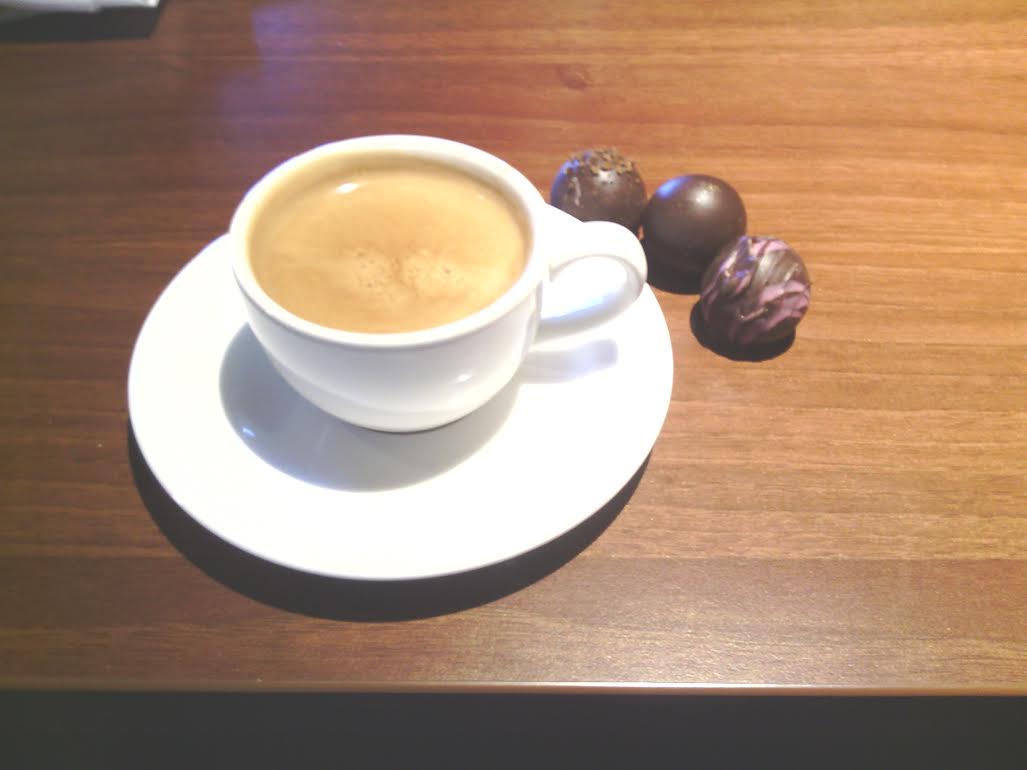
kaffe_tryffel

A while ago I wrote a bit about the recent paper on epigenetic inheritance of acetophenone sensitivity and odorant receptor expression. I spent most of the post talking about potential problems, but actually I’m not that negative. There is quite a literature building up about these transgenerational effects, that is quite inspiring if a little overhyped. I for one do not think epigenetic inheritance is particularly outrageous or disrupting to genetics and evolution as we know it. Take this paper: even if it means inheritance of an acquired trait, it is probably not very stable over the generations, and it is nothing like a general Lamarckian transmission mechanism that can work for any trait. It is probably very specific for odourant receptors. It might allow for genetic assimilation of fear of odours though, which would be cool, but probably not at all easy to demonstrate. But no-one knows how it works, if it does — there are even multiple unknown steps. How does fear conditioning translate to DNA methylation differences sperm that translates to olfactory receptor expression in the brain of the offspring?

A while after the transgenerational effects paper I saw this one in PNAS: Rare event of histone demethylation can initiate singular gene expression of olfactory receptors (Tan, Song & Xie 2013). I had no idea olfactory receptor expression was that fascinating! (As is often the case when you scratch the surface of another problem in biology, there turns out to be interesting stuff there …) Mice have lots and lots of odorant receptor genes, but each olfactory neuron only expresses one of them. Apparently the expression is regulated by histone 3 lycine 9 methylation. The genes start out methylated and suppressed, but once one of them is expressed it will keep all other down by downregulating a histone demethylase. This is a modeling paper that shows that if random demethylation happens slowly enough and the feedback to shut down further demethylation is fast enough, these steps are sufficient to explain the specificity of expression. There are some connections between histone methylation and DNA methylation: it seems that DNA methylation binds proteins that bring histone methylases to the gene (review Cedar & Bergman 2009). Dias & Ressler saw hypomethylation near the olfactory receptor gene in question, Olfr151. Maybe that difference, if it survives through to the developing brain of the offspring, can make demethylation of the locus more likely and give Olfr151 a head start in the race to become the first expressed receptor gene.

Literature

Brian G Dias & Kerry J Ressler (2013) Parental olfactory experience influences behavior and neural structure in subsequent generations Nature neuroscience doi:10.1038/nn.3594

Longzhi Tan, Chenghang Zong, X. Sunney Xie (2013) Rare event of histone demethylation can initiate singular gene expression of olfactory receptors. PNAS 10.1073/pnas.1321511111

Howard Cedar, Yehudit Bergman (2009) Linking DNA methylation and histone modification: patterns and paradigms. Nature reviews genetics doi:10.1038/nrg2540

Tre rekommendationer

1. Lindsey Fitzharris, The Chirurgeon’s Apprentice

Fitzharris är doktor i medicinhistoria och driver den här fantastiska och groteska bloggen om kirurgins tidiga historia och diverse andra morbida saker. Se till exempel det här inlägget om säkerhetskistor:

In 1822, Dr Adolf Gutsmuth set out to conquer his fear of being buried alive by consigning himself to the grave in a ‘safety coffin’ that he had designed himself. For several hours, he remained underground, during which time he consumed a meal of soup, sausages and beer—all delivered to him through a convenient feeding tube built into the coffin.

Gutsmuth wasn’t the first to design something like this. Around 1790, the Duke Ferdinand of Brunswick had the first safety coffin built which included a window to allow light in and a tube to provide a fresh supply of air. The lid of the coffin was then locked and two keys were fitted into a special pocket sewn into his burial shroud: one for the coffin itself and one for the tomb.

2. Anders Sundell, graftweets

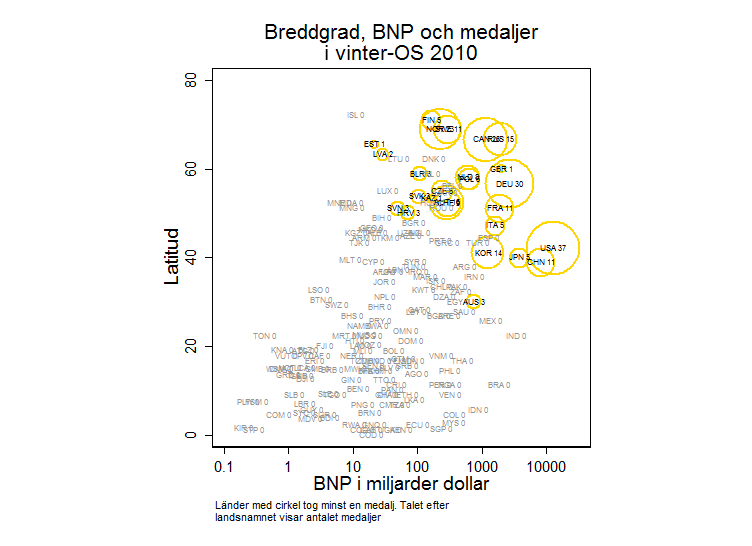
Trogna läsare har nog blivit varse att jag tycker om diagram, särskilt relativt enkla statistiska diagram för att rita och förtydliga data och modeller. Anders Sundell är statsvetare och twittrar då och då roliga diagram av diverse saker — som detta diagram över vilka länder som tog medaljer i vinter-OS 2010:

Graf: Vilka länder tar medalj i vinter-OS? De som ligger i norr och har stora ekonomier.

breddgrad_os

Okej, en twittrare är ingen vidare bra rekommendation för dem som inte själva har twitter. Så jag kan också tipsa om en statsvetarblogg som Sundell med flera skriver: Politologerna.

3. Melissa Wilson Sayres, Näbbdjur näbbdjur näbbdjur näbbdjur!

Dr. Sayres forskar på ett ämne jag tycker är sjukt spännande: könskromosomer. Och om en gillar könskromosomer måste en också gilla näbbdjur (se min post förra året, t.ex.)! I väntan på en utlovad post om näbbdjurets könskromosomer rekommenderar jag den här listan med näbbdjursfakta!

The platypus is currently tied for my favorite mammal (along with hedgehogs and manatees). Platypuses have a lot of unique characteristics, but one of the features I find most fascinating is their sex chromosomes. Before a post about their chromosomes, there’s a few things we need to clear up.

Platypus_by_Lewin

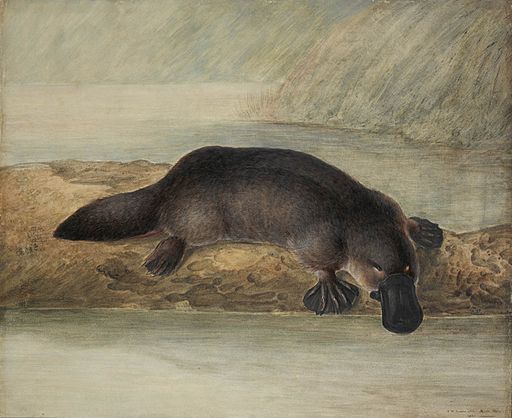
(Repris på ett av mina favoritnäbbdjur. John Lewin (1770-1819) via Wikimedia Commons)

Journal club of one: ”Parental olfactory experience influences behavior and neural structure in subsequent generations”

Okay, neither chickens nor genetics, really, but a little epigenetic inheritance. Dias & Ressler in Nature neuroscience:

When an odor (acetophenone) that activates a known odorant receptor (Olfr151) was used to condition F0 mice, the behavioral sensitivity of the F1 and F2 generations to acetophenone was complemented by an enhanced neuroanatomical representation of the Olfr151 pathway.

Meaning that the offspring of conditioned mice score higher in an odour potentiated startle test (more about that below), avoid the odour at a lower concentration in an aversion test and have more neurons expressing that odorant receptor in their olfactory epithelium and bulb, counted by betagalactosidase staining in transgenic mice expressing M71, the product of Olfr151, coupled to LacZ.

Furthermore,

Bisulfite sequencing of sperm DNA from conditioned F0 males and F1 naive offspring revealed CpG   hypomethylation in the Olfr151 gene. In addition, in vitro fertilization, F2 inheritance and cross-fostering revealed that these transgenerational effects are inherited via parental gametes.

That is, they detect a difference in methylation in one CpG dinucleotide in the 3′ region of the gene.

Comments:

First, I love how the journal does exactly the thing I like to see with figures: below each figure is a link that leads to a data file with the underlying data!

Olfactory behaviour is not my thing, so the tests are new to me, but I’m a bit puzzled by the way they calculate the results from the odour potentiated startle tests. The point is to test whether the presence of the odour make the mice react stronger to a noise. After buzzing the sound 15 times without odour, they perform ten trials with odour plus sound and ten trials with sound only. But in calculating the score, they use only the difference between the first trial with odour and the last trial with sound only divided by how much the mouse reacted to the last of the first 15 sounds. Maybe this is standard, but why throw away the trials in between?

It is not only the olfactory potentiated startle and the sensitivity test, but the staining results. Again, this is not my area, but the results all seem to point to increased sensitivity in the offspring of the treated animals. They react stronger in the startle test, react at lower concentration in the avoidance test and they (in this case, the transgenic mice) have more neurons expressing M71. The cross fostering and the fact that the males were treated but not the females points to genuine inheritance. So, how does the treatment get into the germline? It has to cross that boundary and enter the sperm somehow. Unless there is some mysterious way for information from the central nervous system to travel to the testis, acetophenone must affect the spermatogenesis as well as the olfactory neurons.

All this is very hypothetical, so a little skepticism is not surprising. Gonzalo Otazu wrote in a comment on the Nature news webpage:

The statistical tests in the paper, both for the behavioral measurements as well as for the size of the M71 glomeruli , use as n, number of samples, the number of F1 and F2 individuals. This would be fine if the individuals were actually independent samples. However, they arise from a presumably small number of FO males. The numbers of FO males are not given in the paper. This is a major concern given that there is a lot of variability in the levels of expression of olfactory receptors in these mice that might be inheritable …

I think this is a good point but it will not be solved, as the comment later suggests, by adjusting the degrees of freedom of the test. From the F1 generation and on, genetic differences between the treatment groups, if they do exist, will amplify into a bias issue. That is, it is a systematic difference that might be bigger or smaller than the treatment effect and go in the same or opposite direction — we don’t know. However, the bias should not be there all the time, and not in the same direction, so it strengthens the authors’ case that they’ve done the treatment at least twice (with C57B/6J and with M17-LacZ mice, if not more times).

Maybe my preference for genetics is showing, but I feel the big unadressed alternative hypothesis in most transgenerational effects experiments is cryptic heritability. If you divide individuals into two groups, treat one of them and look for treatment effects in the offspring, you need to be sure that there are not genetc differences between the founders of the two groups. In the subsequent generations, genetic and non-genetic inheritance will be counfounded by design.

Again, randomisation and replication will help, but to be really sure, maybe one can use founders of known relatedness to create a mixed population — say take founders from full-sibships and split them equally between treatment groups, allowing segregation to randomise the genotypes of the next generation. It doesn’t say in the methods — the authors might even have done something like this. One could even use a genetic mixed model that includes relatedness as to estimate treatment effects over in the prescence of a genetic effect. I have a suspicion this experiment would require a much larger sample size, which means more time, work and animals — but I also believe that many would find confounding genetic variation more plausible than transgenerational epigenetic effects of unknown mechanism.

Literature

Brian G Dias & Kerry J Ressler (2013) Parental olfactory experience influences behavior and neural structure in subsequent generations Nature neuroscience doi:10.1038/nn.3594

Morning coffee: microarrays

kaffe_lissabon

Who still uses gene expression microarrays? I do and lots of other people do. And even though it’s pretty clear that RNA-seq is better, as long as it’s more expensive — and it probably still is for many combinations of microarray and sequencing platforms — the trade-off between the technical variability and sample size should still favour microarrays. But the breaking point probably occurs about right now, and I’m looking forward to seeing lots of sequencing based genetical genomics with splice-eQTL, antisense RNA-eQTL and what not! But then again, the same might happen for RNA-seq in a few years: I hope people stick with current generation massively parallel sequencing long enough to get decent sample sizes instead of jumping to small-N studies with the next technology.